



Practical guide
What is SFA (Sales Force Automation)
SFA (Sales Force Automation) is a class of systems that automates the work of a field sales team: planning routes and visits, taking the order inside the retail outlet, recording the state of the shelf, and computing an employee’s performance from the data of the visit itself.
- SFA: field sales automation
- Trade Marketing Promotion Execution
- Analytics & BI for Distribution Decisions
In detail
The acronym comes from FMCG distribution, where most of the work happens on territory rather than in an office: an employee drives a route of retail outlets, collects the order and records the state of the shelf. Before such systems existed, that stretch of work existed only in the employees’ own reports, and there was nothing to check them against.
SFA is not one program but a class of systems, and what draws the boundary of the class is not a set of screens but whose work the system describes. SFA covers what a field employee does in the outlet. Warehouse accounting, finance and stock movement between branches belong to other classes, even though one platform usually carries them side by side.
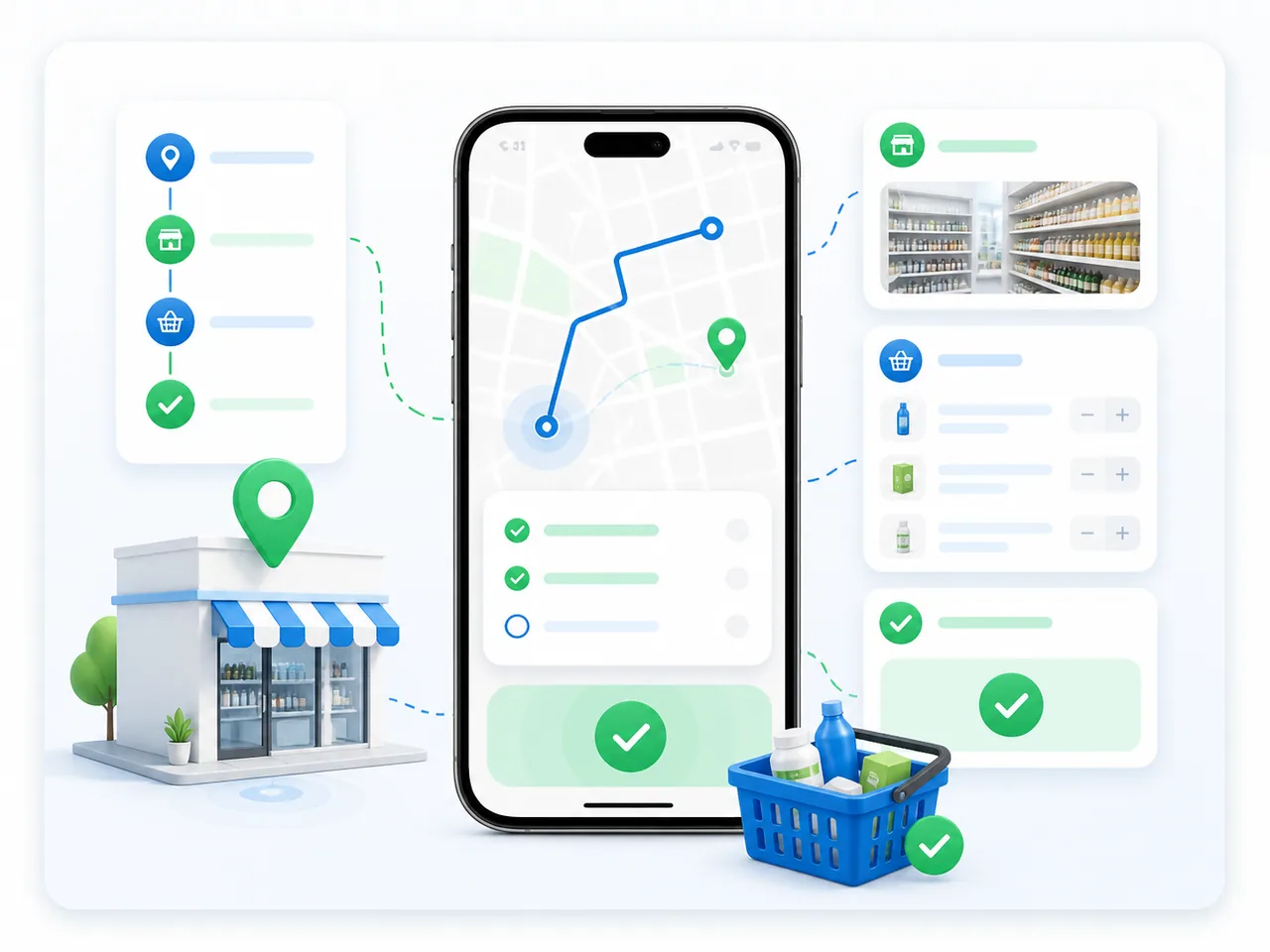
The practical point is that visit data comes into being at the moment of the visit and inside the application the employee is already working in: the route, the time and the place, the completed checklist, the shelf photograph, the order that was taken. The field team’s own indicators are then computed from those same records, so no separate report from the employee is required.
SFA is often confused with CRM. CRM describes the relationship with a customer and the history of deals; SFA describes execution in the outlet - whether the visit happened, what is on the shelf, what was ordered and why there was no order. Indicators such as strike rate or the active customer base are computed from SFA data.
How it is applied
- The territory is split into routes, a route is assigned to an employee, the visit plan for the period is drawn up in advance, and departures from the schedule are recorded by the system.
- The visit runs through a digital checklist: the employee confirms the steps, uploads shelf photographs and fills in forms.
- The order is taken in the outlet against stock balances and the terms agreed with that customer, rather than from the employee’s memory.
- The employee’s location and movements are recorded by GPS, so the fact of a visit does not depend on their account of it.
- Promotional activity and merchandising standards are checked on the same visit, and a deviation is recorded and becomes a corrective task with an owner and a due date.
- Employee productivity and KPI achievement are computed from visit and shipment data and shown in reports and on KPI dashboards.