



M500 cement · 50 kg bag
- Order unit
- Pallet
- Base unit
- Bag
- Conversion
- 1 pallet = 40 bags
- Quantity
- 12 pallets · 480 bags
- Weight
- 24,000 kg
- Volume
- Illustrative calculation · 19.2 m³
Smartup · Industries
Convert the dealer order into exact warehouse quantities, allocate available stock, check credit and keep delivery or claim linked to its source documents.
One order - several constraints
Pieces, packs, pallets, square metres and weight diverge between the order, warehouse and shipment document.
Lines sit in different branches or are already reserved - the dealer receives a date before available stock is confirmed.
Weight, volume, a missing line or a credit restriction becomes visible only after picking and document preparation have started.
Governed product master
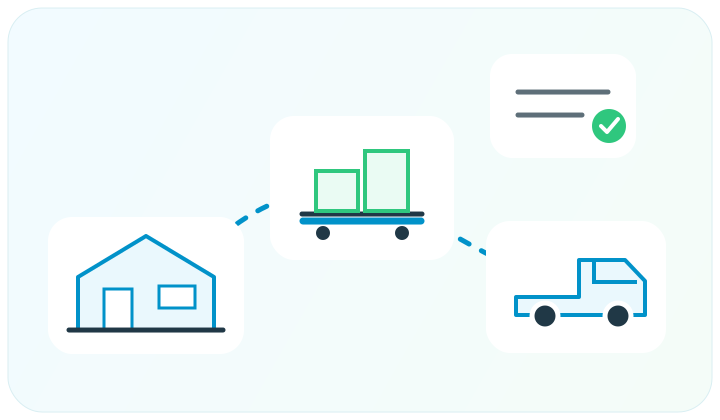
Illustrative products and quantities. Actual units, conversion factors, rounding rules and master-data ownership are agreed during implementation.
Allocation across branches
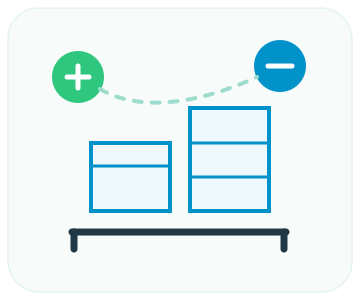
Reservation12 cement pallets · confirmed
ConstraintMetal profile · shortfall of 8 packs
Illustrative inventory. Reservation, transfer and branch-priority rules are agreed separately.
Control before committing to the dealer
Actual warehouse stock after active reservations and approved transfers.
Payment term, overdue receivables, recorded payment and available credit before shipment.
Calculated order quantities are available to the agreed picking and delivery process.
All lines, batches and documents are ready, or a management decision is recorded explicitly.
Delivery execution
Tashkent · dealer warehouse
Illustrative deliveries. Statuses, transport data and integrations depend on the agreed implementation scope.
Shortage, damage and claim
The dealer confirms the quantity and condition of received goods.
Decision by role
Order units, price, available stock, completeness and execution status.
Confirm the order, approve a partial delivery or change its source.
The manager sees which warehouse can fulfil the order and under which terms
The dealer receives an order status based on picking and delivery data
A quantity or condition variance remains linked to the original delivery
Sales, warehouse stock and receivables are available by branch in one data model
Smartup connects product masters and units of measure, dealer orders, warehouses, reservations, picking, documents, delivery, settlement and claims within the agreed scope. Transport routing and optimisation, engineering load calculations, packaging rules and master-data ownership are defined separately for each implementation.
No. Smartup can work alongside the current ERP and exchange agreed master data, stock, orders, documents, payments and statuses. Master-data ownership is recorded in the project's integration map.
The team agrees product masters and units of measure, warehouses, reservation and credit rules, delivery statuses, documents and acceptance criteria. With source data ready, the first production scope can launch from four weeks.