



Practical guide
What is DMS (Distributor Management System)
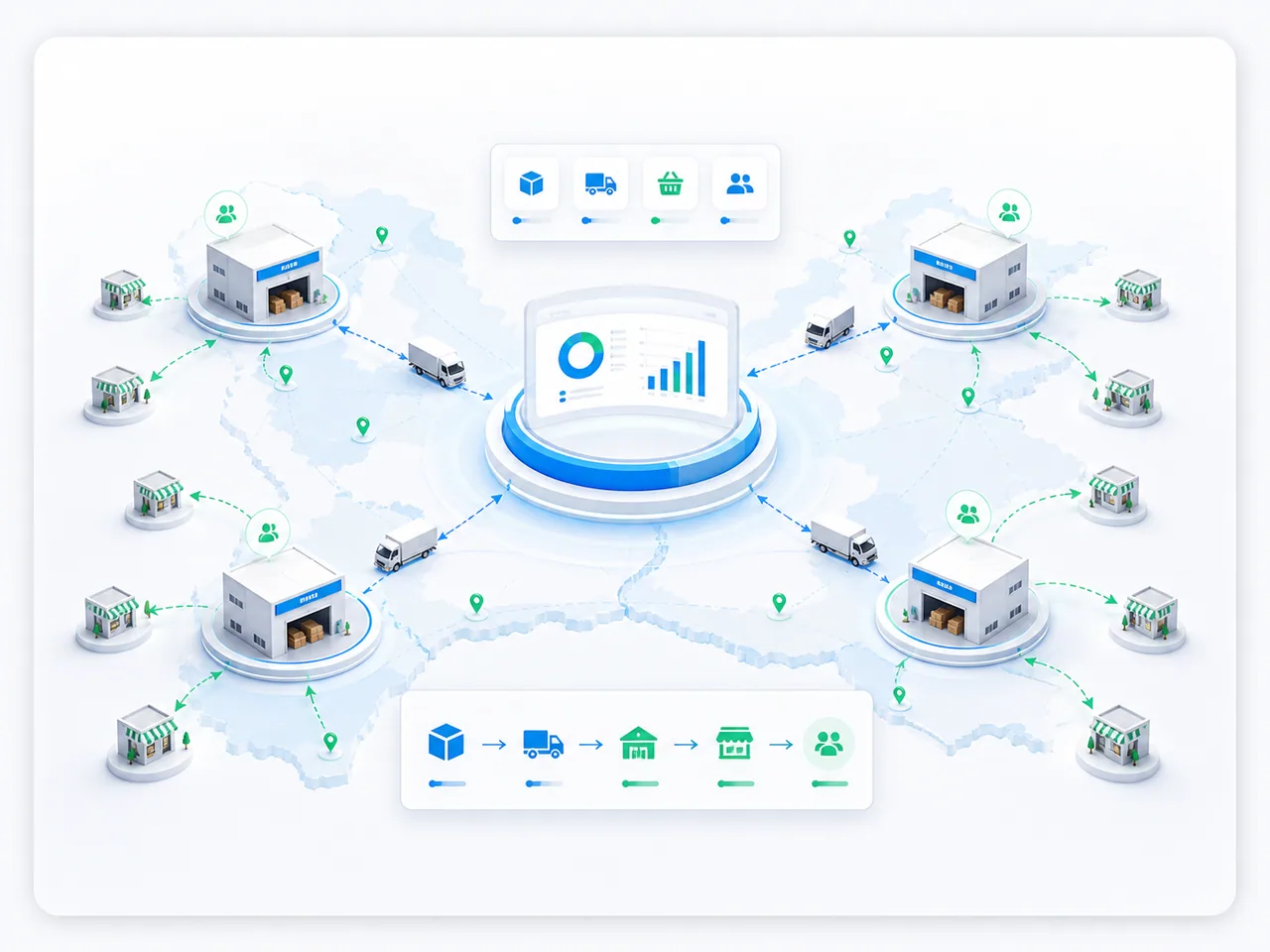
DMS (Distributor Management System) is a class of systems for managing the movement of goods after they leave the manufacturer: the distributor’s warehouse, shipments to retail outlets, stock balances, settlements with customers and reporting on secondary sales.
- SFA: field sales automation
- Warehouse Operations and Inventory Management
- Analytics & BI for Distribution Decisions
In detail
The term came from the manufacturer’s side. The primary sale - the manufacturer’s shipment to a distributor - is visible in its own books, while everything that happens afterwards happens in somebody else’s systems: the distributor has its own warehouse, its own customers and its own reporting. DMS is the way that part of the chain is brought back into a shared data perimeter.
Hence two readings of the acronym, and both are in use. For a manufacturer, DMS is the system that collects secondary sales and stock balances across a network of partners. For the distributor itself it is the operating system of its business: receiving and shipping, inventory, debt and transfers between branches.
SFA and DMS are often called by one name, but they answer different questions. SFA describes what an employee does in a retail outlet; DMS describes the movement of goods and money between warehouses, branches and customers. Field team data enters DMS as one of its sources, not the other way round.
The main requirement of a DMS is comparability. Data from different partners comes into one view only when the product and customer catalogues, the units of measure and the rule for recognising a sale are described the same way. Without that, a consolidated report adds up quantities that cannot be compared and looks more convincing than it is.
How it is applied
- Receiving, shipping, write-offs and internal warehouse transfers are kept in one ledger, so a balance is assembled from source documents rather than reconciled between journals.
- Stock balances per warehouse are available in real time, so an order is taken against what is actually there rather than against yesterday’s export.
- Accounting is kept by series and batch number, and the shelf life is visible before the batch leaves for a retail outlet.
- Inter-branch transfers and supply planning run in the same perimeter as sales, so the same item is not ordered again.
- Sales, warehouse, finance and field work come together in consolidated reporting, from which views by customer, territory and product are assembled in a report builder.