



FMCG/CPG metric
OSA and OOS: availability of a product on the shelf and its absence
OSA (On-Shelf Availability) is the share of product items from an agreed list that are actually present on the shelf at the moment of the check. OOS (Out-of-Stock) is the inverse - the share of items missing. Stock in the outlet’s back room does not count as availability on the shelf.
- AI Shelf Recognition for Retail Execution
- Trade Marketing Promotion Execution
In detail
The two indicators describe one fact from opposite sides and together cover the whole list: what is not present is missing. They are kept apart because different conversations sit behind them. OSA is discussed as a presence standard, with the retail chain and with the field team; OOS is worked through as an incident on a particular item in a particular outlet.
The main error in both indicators is to read availability from the warehouse. An item can be sitting in the shop’s back room, riding in a van or standing on a pallet in the hall and still be absent for the shopper. So OSA is measured on the shelf and at the moment the shopper walks up to it, and not from a balance in an accounting system.
The indicator needs a list to be computed against, otherwise the denominator is arbitrary: OSA across a supplier’s whole catalogue and OSA across that outlet’s assortment matrix give different values for the same shelf. The list is usually taken from the MML or from the format’s planogram.
The data source changes what the indicator means. OSA from a merchandiser’s visit is a snapshot at the moment of the visit; OSA from till data is an estimate inferred from an absence of sales; OSA from a shelf photograph is recognition of what is standing on it. The three methods do not agree with each other, and comparing periods is only correct inside a single method.
How it is measured
- The list of items for the outlet’s format is fixed - an assortment matrix or a planogram. That same list becomes the denominator.
- The check records which items from the list are actually standing on the shelf: the OSA numerator is those present, the OOS numerator those missing.
- The moment and the method of the check are written down with the value, because a visit snapshot, an estimate from receipts and recognition from a photograph are not interchangeable.
- Views of the calculation: retail outlet, chain, category, SKU, employee, period.
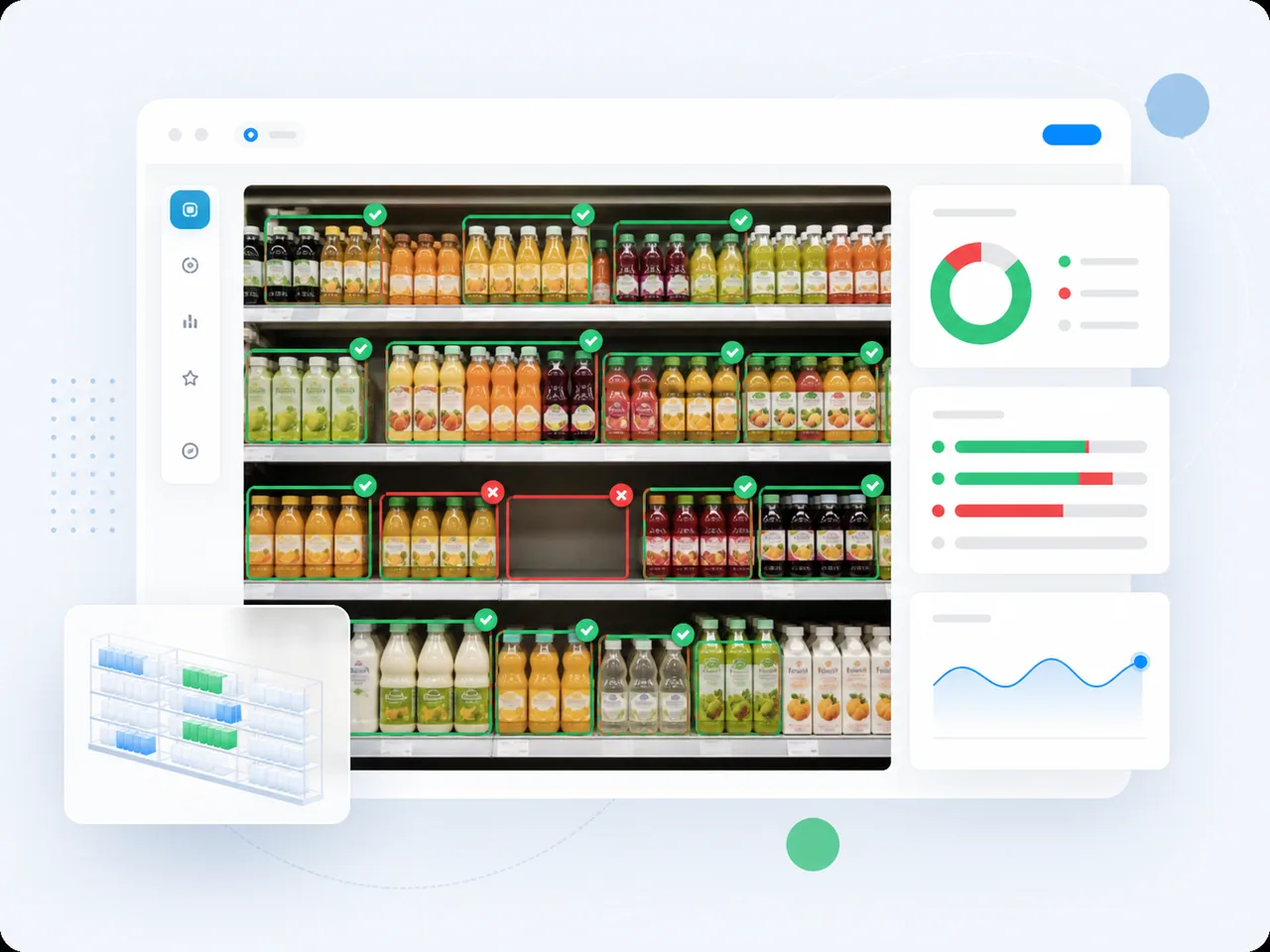
- Products on a shelf photograph are recognised automatically, the display is compared with the approved planogram and the brand standards, share of shelf is computed and missing items are identified.
- A deviation from the display standard is recorded as a breach, and correction guidance goes back to the merchandiser while they are still in the outlet.