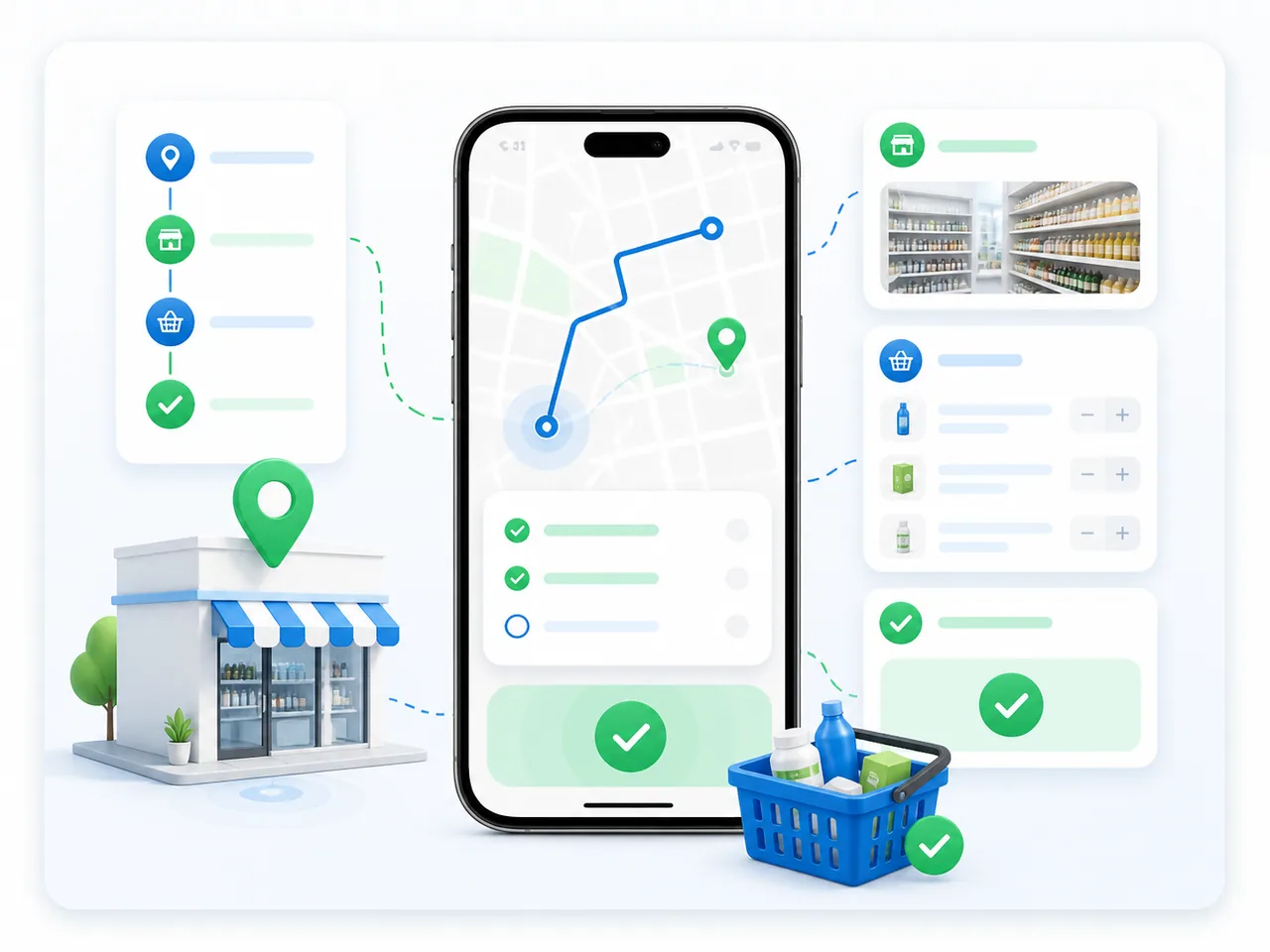
01 · Coverage
A route shows customer coverage, not just how busy the team is.
Planned and completed visits are reviewed by territory, employee, channel and outlet.
- Fact
- Which outlets were planned, visited, missed or rescheduled.
- Review together
- Route coverage, active customer base and visit frequency.
- Investigate the cause
- Why an outlet was missed: the route, customer availability, adherence to the plan or inaccurate customer data.
- Decision
- Revise visit frequency and sequence using verified facts.
02 · Strike Rate
A visit without an order should still have an explainable outcome.
Strike Rate shows the share of visits that result in an order, but does not explain the reasons on its own.
- Fact
- An order is created, or a structured reason for no order is recorded.
- Review together
- Strike Rate, order value and mix, assortment matrix and reason for no order.
- Investigate the cause
- No demand, stock, available credit, shelf space, suitable price or access to the decision-maker.
- Decision
- Assign an action for the specific cause instead of increasing visit counts without understanding it.
03 · OSA / OOS
A shelf gap becomes part of the visit record, not a later observation.
SKU availability is recorded by outlet and compared with orders and stock on hand.
- Fact
- Which items are on the shelf, which are missing and what was ordered for replenishment.
- Review together
- OSA / OOS, assortment matrix, stock on hand, orders and actual SKU presence on the shelf.
- Investigate the cause
- The gap is linked to stock, ordering, shelf execution, assortment or delivery.
- Decision
- Assign availability, delivery and shelf execution issues to the relevant process owners.
04 · Expiry
Expiry risks are identified during the visit.
The employee records products nearing expiry and links them to the outlet and SKU.
- Fact
- Where the batch is located, which SKU is affected and what action is needed at the outlet.
- Review together
- Expiry dates, stock on hand, sales velocity and the next delivery volume.
- Investigate the cause
- Oversupply, weak demand, an unsuitable assortment matrix or delayed stock rotation.
- Decision
- Adjust shelf execution, stock rotation or the next delivery volume according to an agreed rule.
05 · Shipments
Delivery volume is checked against the outlet's ability to sell the goods.
The order is reviewed alongside stock on hand, shelf conditions, outlet history and customer constraints.
- Fact
- What the outlet already holds, what is selling and what volume is proposed for shipment.
- Review together
- Stock on hand, sales, orders, available space, expiry dates and customer terms.
- Investigate the cause
- The volume does not match demand, current stock or commercial constraints.
- Decision
- Check the recommendation against actual data and leave the decision with the responsible employee.