



Practical guide
ERP and the distribution execution layer: dividing responsibility
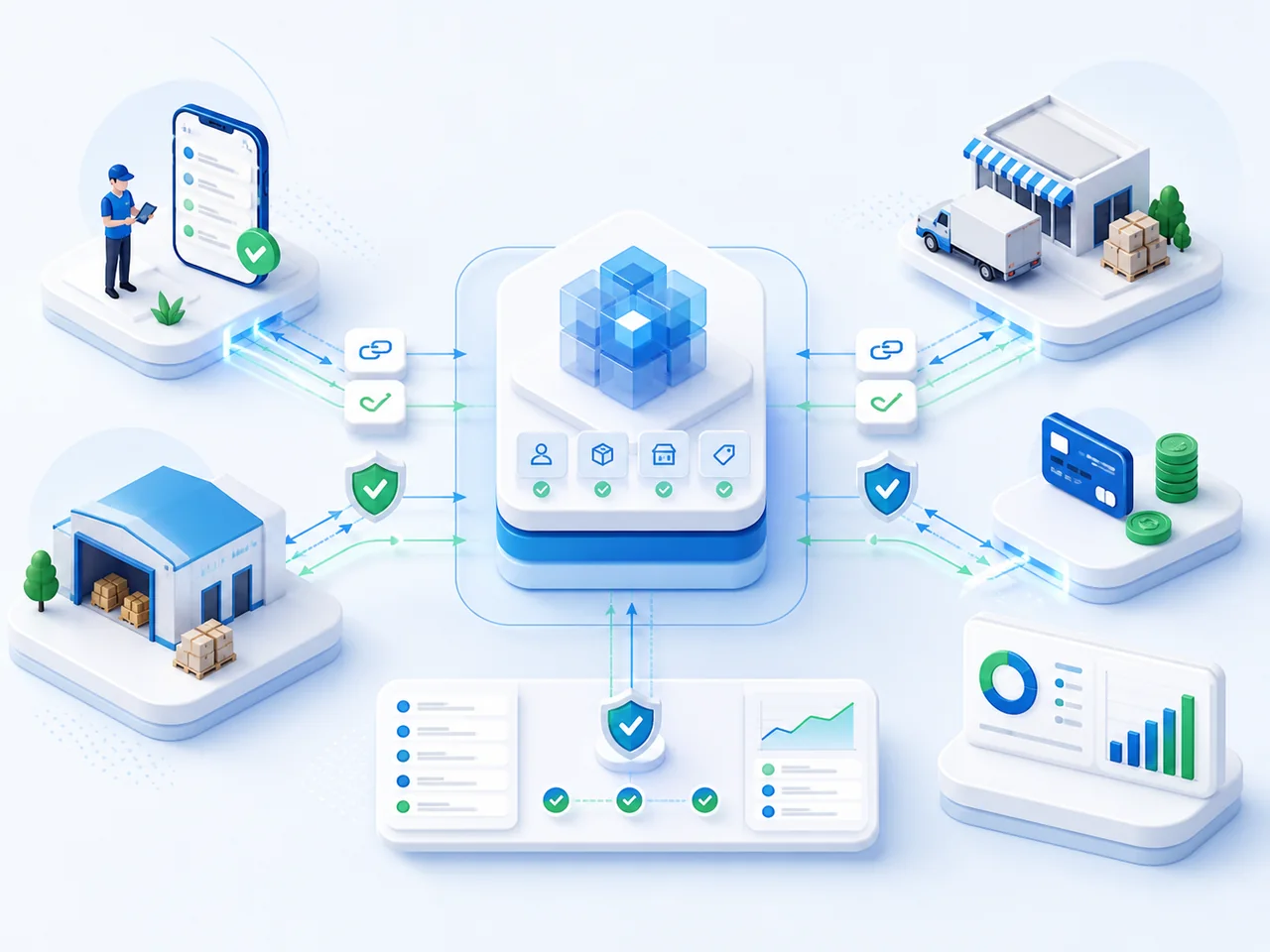
ERP typically remains the system of record for accounting and master data, while the distribution execution layer manages visits, orders, distributors, shelf activity and operational decisions. Integration connects the processes without moving every capability into one system.
- For IT directors
- Integrations with Existing ERP and External Systems
- Green Line Trading: product traceability, customer master data and delivery control
In detail
Problems start when both systems claim ownership of the same fact. A customer, price, stock balance or document status is then edited in more than one place, and integration becomes a continuous reconciliation exercise.
A resilient architecture assigns ownership by data type. ERP may own item master data, financial accounting and final documents; the execution layer may own visit plans, verified outlet activity, orders, field evidence and operational exceptions.
Data exchange should follow business events: what changed, who needs it and how the receiving system confirms acceptance. An integration error needs an observable review queue and an owner rather than disappearing inside a technical log.
How it is applied
- List the shared entities and assign one system of record to each of them.
- Define the business events that trigger an exchange and the minimum message payload.
- Map external and internal identifiers without manual matching in each transaction.
- Add idempotency, controlled retries and an observable error log.
- Test the end-to-end path from a master-data change to an accepted business document.
Practical checklist
- Every shared entity has one named data owner.
- Exchange direction and frequency follow an explicit business need.
- A repeated message does not create a duplicate transaction.
- The team can see an error, its business impact and the person accountable for resolution.
Scope and limits
An integration architecture does not imply a ready-made connector for every ERP. Objects, exchange direction, frequency, security and responsibilities are agreed for each implementation.