



Practical guide
Digital marking of goods in Uzbekistan: what it changes in accounting
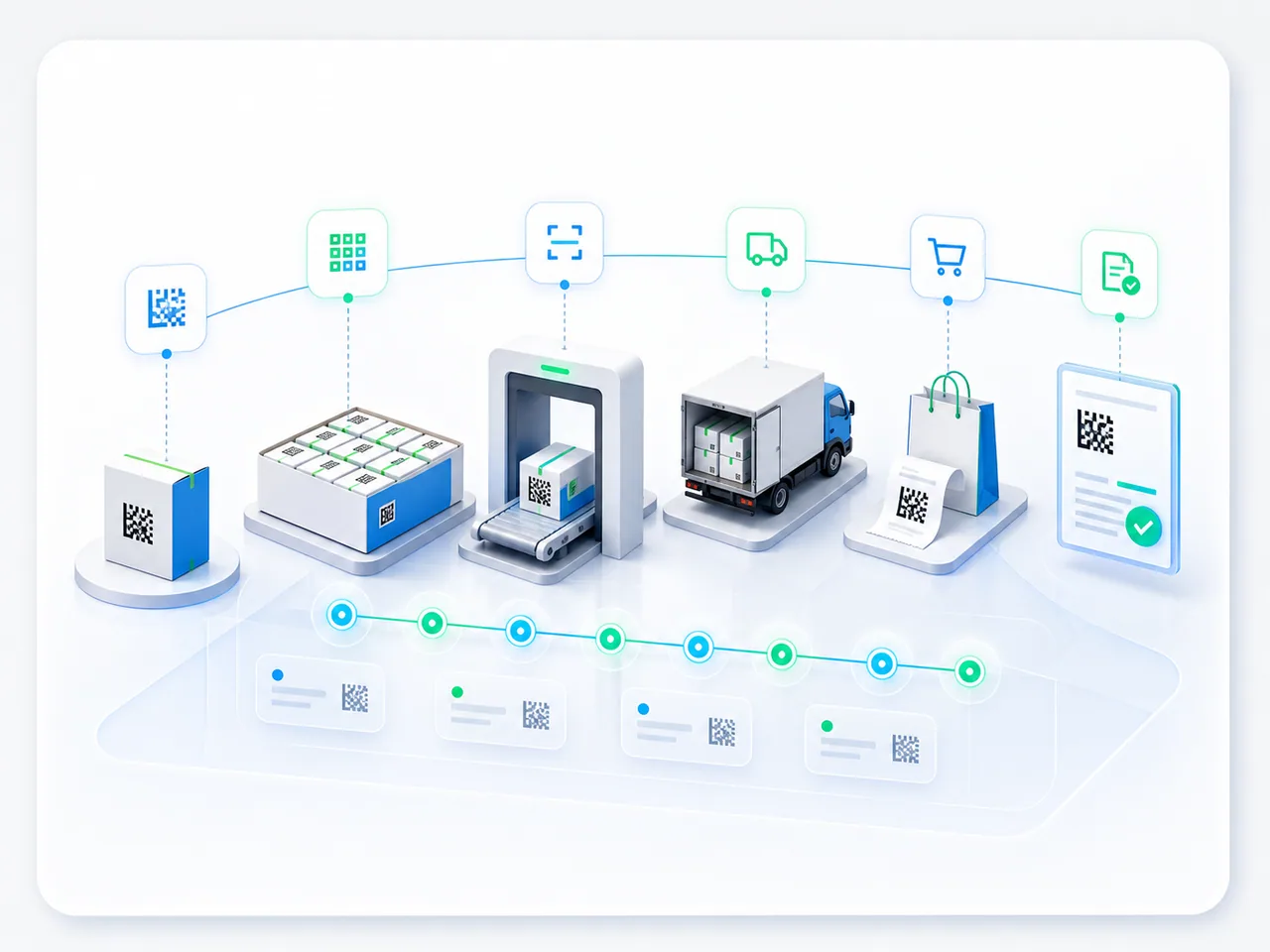
Digital marking is a unique DataMatrix code on a unit of goods and the registration of its movement in a state system; in Uzbekistan that system is called Asl Belgisi. On shipment the codes reach the electronic invoice, and on receiving they are matched against the codes on the goods themselves.
- Marked Goods & E-Invoicing
- Warehouse Operations and Inventory Management
In detail
Marking changes the unit of account rather than the paperwork. Before it a distributor dealt in quantities: so many units of such an item. With marking every unit has a code of its own, and accounting is kept by codes and not only by quantity - which touches receiving, storage, shipping and returns.
The second consequence is the coupling of the warehouse document to the fiscal one. A code received into the warehouse has to match the code on the electronic invoice at shipment. While codes are carried between warehouse accounting and fiscal documents by hand, a mismatch is discovered on the side of the controlling system: the shipment stops and the cause is looked for after the event.
The third consequence is operational. A batch for a particular buyer has to be picked in advance so that the codes in the document match what actually left, and a partial refusal means correcting the document while the forwarder waits. The delay goes away under an order of work in which the invoice is issued at the moment of shipment rather than prepared well ahead of it.
What exactly is asked of a market participant is deliberately not written here. Which goods carry a code, and the procedure for working with codes, are set by the state and change over time, so retelling them on an undated page would misinform the reader. The state systems publish the present picture themselves - Asl Belgisi for marking and Factura.uz for electronic invoices; this article describes only how accounting for marked goods is arranged.
How it is applied
- The marking code is scanned on receiving and stays attached to the unit of goods until it is shipped to a retail outlet.
- A unit’s path is reconstructed from warehouse and shipment documents, so the movement of marked goods from the warehouse to the outlet is traceable by code.
- The electronic invoice is built from those same codes and goes to the controlling authorities without manual re-entry.
- The exchange with the state systems runs through ready integrations - Asl Belgisi and Factura.uz.
- Warehouse operations on marked goods - receiving, shipping, stocktaking, accounting by series and batch number - are kept in the same perimeter as operations on unmarked ones.
- Operations on marked products stay in the system and are available for analysing movement and demand.