



Practical guide
SFA/DMS and accounting: where the boundary sits
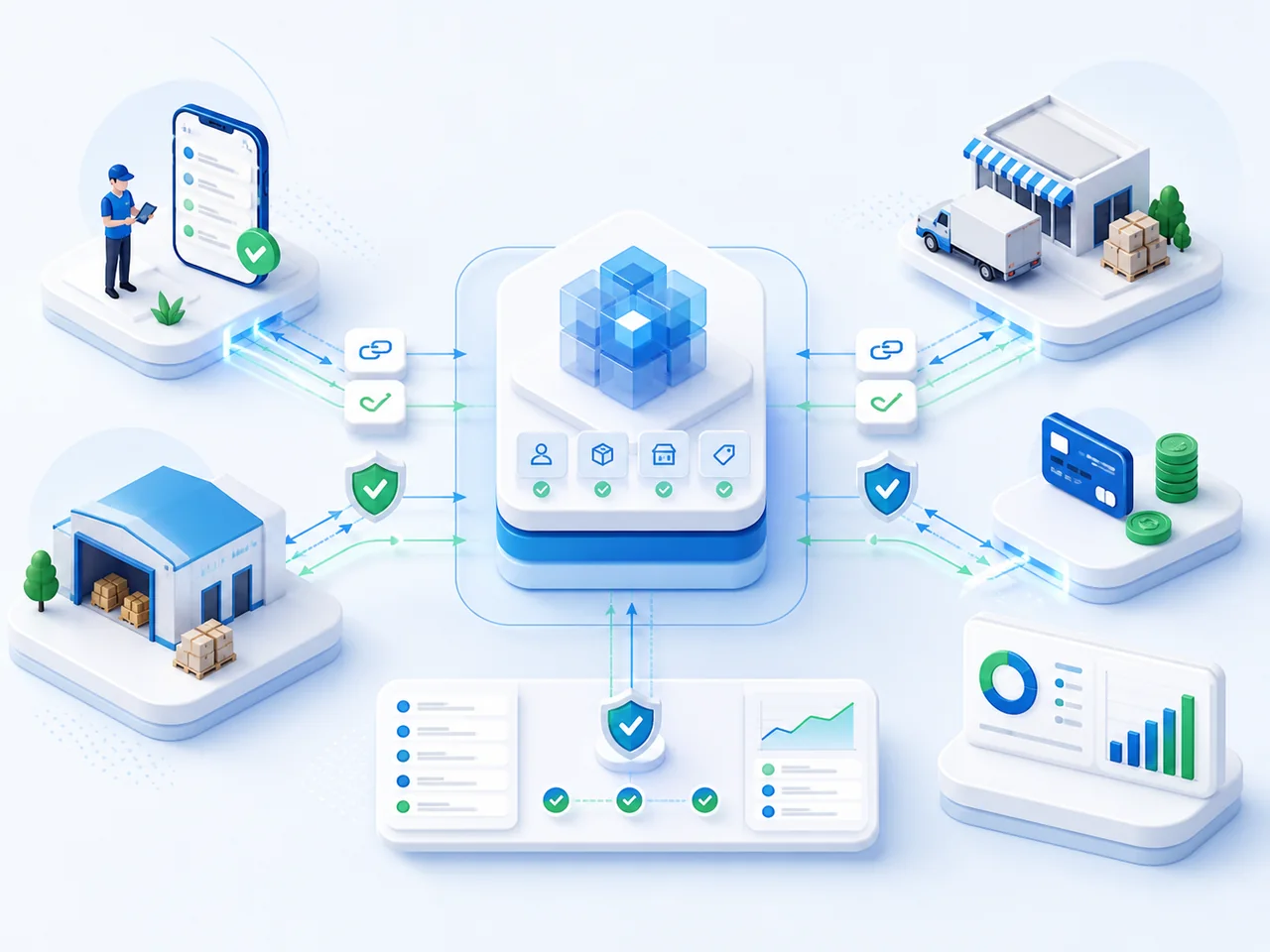
SFA and DMS manage distribution execution, while the accounting core owns accounting records, postings, inventory valuation and period close. Integration transfers agreed documents and statuses between these responsibilities.
- ERP and Accounting for Distribution
- Green Line Trading: product traceability, customer master data and delivery control
- For IT directors
In detail
The boundary follows ownership of a fact, not the names of screens. A visit, field order and execution status originate in operations; an accepted document, ledger movement and accounting recognition originate in the system of record.
When the same fact can be edited in several systems, teams receive different stock, status and balance views. The source, transfer event and reconciliation rule must therefore be agreed before integration is configured.
How it is applied
- Break the end-to-end process into events, documents and accounting facts.
- Assign one owning system and one data-quality owner to every entity.
- Define how identifiers, documents, statuses and errors move between systems.
- Reconcile the operational outcome with the accounting fact and assign exceptions.
Practical checklist
- Orders, shipments, payments and returns each have one source of truth.
- Field users do not re-enter accounting facts.
- An exchange error is visible to the process owner and has a next action.
- The reconciliation rule is approved before production use.
Scope and limits
Responsibility depends on the selected architecture and accounting policy. This guide does not assume that SFA/DMS replaces accounting or that ERP should manage field execution.