Skip to main content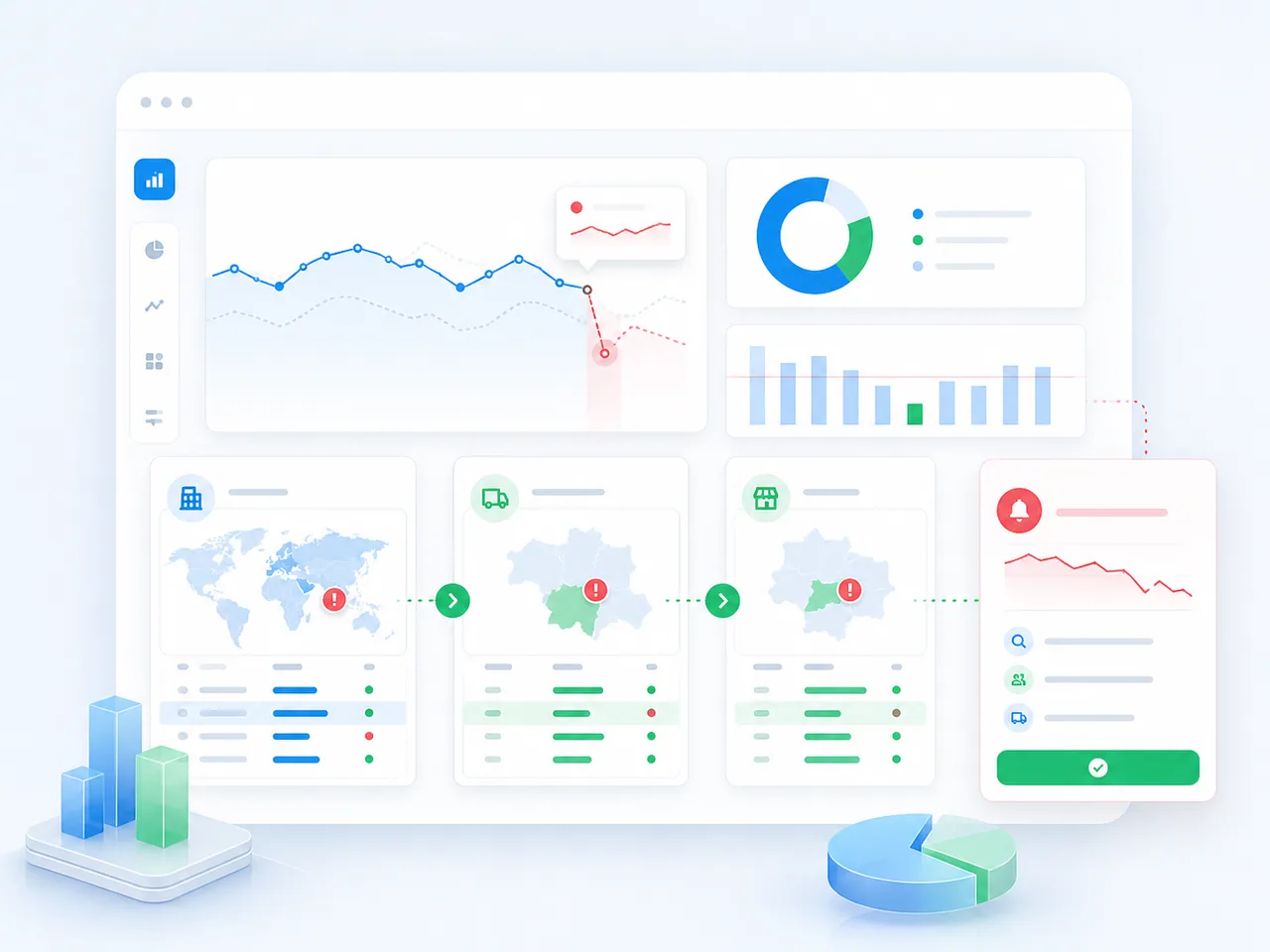




Practical guide
Managing tasks created by distribution exceptions
An exception task connects a process signal to one owner, a due point, expected evidence and verification. A report then becomes the start of a management action rather than the end of the process.
- Task Management and Execution
- SV-Cluster: credit checks and verified visits
- Distribution Group Management
In detail
Not every alert needs a task. A task is useful when the exception has a defined outcome, accountable role and verifiable resolution, such as restoring availability, resolving overdue debt or repairing an exchange error.
Clicking close is not proof. Verification should rely on a new process event, document, image or decision from an authorized role.
How it is applied
- A rule or analysis captures the exception and its source context.
- The system assigns an owner, priority, due point and expected outcome.
- The assignee adds evidence or routes the task through the agreed path.
- A reviewer accepts the result, returns the task or starts the next cycle.
Practical checklist
- The signal links back to its original process fact.
- The task has one owner and a clear completion criterion.
- Closure requires evidence appropriate to the exception type.
- Recurring causes are available for analysis and rule changes.
Scope and limits
Process-linked tasks are not a replacement for general project management. They apply to distribution exceptions with an identifiable fact, owner and verifiable result.